Alerts from Our Foreign Offices. IP News Review from Russia & CIS (March – August 2026)
23 November 2026Alerts from Our Foreign Offices
Non-Use of Trademarks in Kazakhstan: Case Law Trends from 2024 to 2026
Geographical Indications are Coming into Play in Uae
IP News Review from Russia & CIS (March – August 2026)
РОССИЯ:
Government Acts and Departmental Acts
Disputes over Granting and Termination of Protection
Disputes on Infringement of Exclusive Rights
Rospatent Practice
1. Well-Known Trade Marks
2. Names of Places of Origin of Goods (Poo) and Geographical Indications (Gi)
CIS
1. Eurasian Patent Organization
2. Georgia
3. Belarus
4. Kazakhstan
5. Uzbekistan
Alerts from Our Foreign Offices
Non-Use of Trademarks in Kazakhstan: Case Law Trends from 2024 to 2026
Bauyrzhan Zhanadilov
Lawyer (Astana)
In Kazakhstan, trademark registration grants the owner the exclusive right and simultaneously imposes an obligation to use the mark. Failure to fulfill that obligation allows an interested party to challenge the registration.
According to Paragraph 4 of Article 19 of the Law of the Republic of Kazakhstan № 456-I dated July 26, 1999 “On Trademarks, Service Marks, Geographical Indications and Appellations of Origin of Goods” (hereinafter – the Law on Trademarks), such a claim is permitted if the trademark has not been used for three years preceding the date of filing the lawsuit. The claim may relate to all or some of the goods and services. A similar provision is set forth in Article 1028 of the Civil Code of the Republic of Kazakhstan (hereinafter – the CC of the RK).
At the same time, case law from 2024 to 2026 shows that such disputes are no longer limited to the question of whether the right holder has provided evidence of trademark use. Courts also assess whether the plaintiff has standing, compliance with the three-year non-use requirement, and the parties’ good faith. In addition, practice reveals a number of other significant aspects: the specifics of hearing cases where a foreign right holder does not have a representative office or agent in Kazakhstan, and the consideration of such disputes under summary (written) proceedings.
1. The Interest Must Be Genuine
Under Kazakh law, any interested party has the right to challenge a trademark registration due to non-use. However, the legislation does not explicitly define who qualifies as an interested party in this category of disputes.
The most relevant definition is found in Article 157 of the CC of the RK, which defines an interested party as a person whose rights and legitimate interests have been or may be violated as a result of a transaction.
However, this definition applies exclusively to challenging transactions.
Consequently, courts often refer to Article 8 of the Civil Procedure Code of the Republic of Kazakhstan (hereinafter – the CPC of the RK), which provides that everyone has the right to apply to court for the protection of violated or disputed rights, freedoms, or legitimate interests, and verify whether the plaintiff has the relevant right or legitimate interest.
 A notable example is case № 7119-25-00-2/5193 in the lawsuit filed by sole proprietor “Hombre” against “Vita Group” LLP, heard by the Specialized Interdistrict Economic Court of Astana. The plaintiff argued that the defendant’s trademark № 60009 for goods in Class 9 of the Nice Classification prevented the registration of the designation “mob.” developed by the plaintiff. However, at the time the case was heard, the expert opinion from the National Institute of Intellectual Property (hereinafter – NIIP), including a refusal to register, had not yet been received. The court found that the anticipated decision and the plaintiff’s mere intention to register the mark did not confirm a violation or threat of violation of its rights, and dismissed the claim.
Thus, the mere filing of one’s own application may now be insufficient to prove a legitimate interest. The plaintiff must also prove that the challenged registration actually prevents the registration of the applied-for designation by submitting a preliminary refusal opinion from the NIIP or a decision on refusal of registration.
2. The Three-Year Period Is a Mandatory Requirement
 Given that the legislation provides for a period of 3 years preceding the date of filing a lawsuit, this period for cancellation is mandatory. Thus, in case № 7142-24-00-2/14319, heard by the Interdistrict Civil Court of Astana, LOGNEX LLP requested the termination of trademark registration № 75601 in respect of services in Classes 39 and 42 of the Nice Classification. The mark was registered on October 25, 2021, and the lawsuit was filed before the expiration of three years from the date of registration.
The court dismissed the claim, stating that the statutory period of non-use had not yet expired as of the date of application.
Consequently, the three-year period must be calculated in accordance with the statutory requirements. If the registration has been in effect for less than three years, the claim is premature, even if there is no evidence of any use of the mark.
3. Abuse of Rights in Trademark Non-Use Disputes
Changes in the geopolitical situation have led to an increase in claims for the cancellation of trademarks of well-known companies, based on their alleged diminished presence in Russia and Central Asian countries. In this regard, when considering such disputes, courts pay special attention to the plaintiffs’ actions and the purposes of their claims.
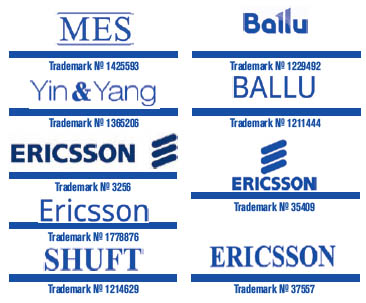 The most notable conclusion was established in cases № 7119-24-00-2/3736 and № 7119-24-00-2/3695 in the lawsuit filed by R-Klimat LLP against Telefonaktiebolaget LM Ericsson and the NIIP by the Specialized Interdistrict Economic Court of Astana. The claims concerned the termination of trademark registrations № 3256, 35409, and 37557 in respect of goods in Class 11 of the Nice Classification.
The court took note of the plaintiff’s and defendant’s trademarks, the long history and reputation of the Ericsson brand, and the submitted evidence of use, and concluded that the plaintiff’s actions to register an identical designation were aimed at free-riding on the defendant’s reputation and goodwill. With reference to Paragraphs 4-7 of Article 8 of the CC of the RK, the court qualified the plaintiff’s behavior as abuse of rights and denied judicial protection.
Thus, the mechanism for terminating protection cannot be used solely as a means of appropriating a well-known designation. Even in a dispute over the actual use of a mark, the court also evaluates the plaintiff’s commercial purpose and may dismiss the claim due to bad faith.
4. Right Holder’s Passivity Increases the Risk
The opposite result was obtained in case № 7119-24-00-2/14135 in a lawsuit filed by “CHETYRE LAPPY” LLP against “Kormotech” LLP regarding international registration № 1013370 “CLUB 4 LAPPY”: the claim was partially satisfied. The court took into account the defendant’s absense of a representative office, official importers and distributors, points of sale in Kazakhstan, and registered licensing agreements. The duly notified right holder did not participate in the proceedings and did not submit evidence of use.
The mere absence of a representative office or office in Kazakhstan does not indicate non-use of the trademark. However, it is advisable for a foreign right holder to have a local representative, such as a patent attorney, who can respond to disputes in a timely manner, represent its interests, and ensure the submission of evidence of actual trademark use in Kazakhstan to the court.
5. Summary (Written) Proceedings
In practice, cases have become more frequent where such disputes are heard under summary (written) proceedings provided for by Chapter 21-1 of the CPC of the RK, which does not require summoning the parties. Under such a procedure, disputes over trademark cancellation can be resolved without the actual participation of the right holder. 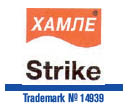 This applies to both national and international registrations, especially if the owner does not have a representative office or agent in Kazakhstan.
For example, in case № 7119-25-00-2-7192 between KDV VORONEZH LLP and YILDIZ HOLDİNG A.Ş., the Specialized Interdistrict Economic Court of Astana considered and granted the claim for the cancellation of trademark under certificate № 14939 in respect of all goods in Classes 29 and 30 without the right holder being heard.
6. Practical Conclusions
The reviewed cases demonstrate that plaintiffs should confirm their standing in advance, observe filing deadlines, and act in good faith. Right holders, in turn, need to timely submit their position and evidence of trademark use, and foreign owners without a representative office in Kazakhstan are advised to appoint a representative, especially given the possibility of summary proceedings.
A New Law “On Competition” Entered Into Force in the Kyrgyz Republic (Law of the Kyrgyz Republic № 72 dated May 21, 2026).
Cholpon Dootalieva
Kyrgyz Patent Attorney
Regional Director (Bishkek)
The Law has not been adopted in the form of piecemeal amendments, but as a completely new version, featuring an updated structure and a number of regulatory mechanisms that the previous regulation, in effect since 2011, did not encompass. For businesses, this means that familiar benchmarks – dominance thresholds, transaction approval procedures, and the list of prohibited practices – must be re-evaluated. Below is an overview of the key changes.
First and foremost, the approach to determining a company’s dominant position on the market has changed.
Previously, recognizing an entity as dominant required a market share of at least 35 % alongside the concurrent satisfaction of several other conditions. Now, the threshold has been lowered to 15 %, and to recognize dominance, the presence of at least one of several criteria is sufficient – for example, a significantly larger volume of resources compared to competitors, or the lack of a realistic ability for buyers to influence transaction terms (absence of countervailing buyer power). This significantly expands the range of companies that may be recognized as holding a dominant position and requires a more careful assessment of one’s own market power.
Furthermore, the concept of collective dominance has been introduced for the first time – under which several formally independent companies, due to economic ties between them, overlapping management, or joint ventures, de facto act in a concerted manner and may be recognized as dominant as a group.
The procedure for controlling mergers and acquisitions (economic concentration) has changed significantly.
A clear quantitative threshold for mandatory notification to the competition authority has been established: the aggregate turnover of the transaction participants for the previous year exceeding 1 billion soms. The acquisition of a stake of more than 25 % in a company or the establishment of control over it also falls under this regulation. The deadlines for reviewing transactions are fixed: 90 business days for mergers and acquisitions and 14 business days for the establishment of joint ventures.
Crucially, if the competition authority fails to meet the deadline, the transaction is deemed automatically approved – this is a vital guarantee for businesses against procedural delays. Conversely, a transaction executed in violation of the notification procedure is deemed legally null and void, meaning it does not produce any legal effects.
The list of actions considered as abuse of a dominant position has been largely preserved, including the prohibition of imposing detrimental terms on a counterparty, unjustified refusal to conclude a contract, setting monopolistically high or monopolistically low prices, and similar practices. However, the wording has been clarified and made more specific: prohibitions on product tying (selling one product only together with another) and actions leading to an unjustified reduction in counterparties’ profit margins have been separately highlighted. Similarly, the list of forms of unfair competition between companies has been clarified – copying a competitor’s product or packaging, misleading consumers, using a third party’s trademark or trade name, and disclosing trade secrets.
The novelty here is that, instead of an exhaustive list of specific violations, there is now a general formulation prohibiting unfair conduct in the acquisition and use of xclusive rights in general, meaning that the prohibition may apply not only to what is explicitly listed in the law.
One of the most notable innovations is the introduction of special regulation for digital platforms. The Law introduces for the first time the concepts of a digital platform and network effects (direct and indirect) and explicitly prohibits the use of network effects to gain decisive influence over the market, to foreclose competitors, or to create barriers to market entry. This means that large online platforms, marketplaces, aggregators, and similar services are now subject to heightened competition scrutiny – even without formal signs of traditional dominance, their market power, based on the number of users and the volume of data, can serve as grounds for claims. At the same time, digital platforms of organizations supervised by the National Bank are regulated separately by banking legislation.
A new institution has emerged: competition law compliance. Companies have been granted the right (but not the obligation) to implement an internal system for preventing violations of competition legislation or to engage an external consultant for this purpose. The internal document on the procedure for assessing and mitigating risks must be published on the company’s website, and its draft can be submitted in advance to the competition authority for preliminary approval, with a 30‑business-day period allocated for this. The existence of a functioning compliance system becomes an additional ground for mitigating or exempting from liability when a violation is detected, although this rule does not apply to cartels and other forms of horizontal collusion between competitors.
The leniency program for persons voluntarily reporting a cartel has been retained but supplemented: it now explicitly provides for the possibility of mitigating liability not only for the first applicant (who is fully exempted from sanctions), but also for subsequent cartel participants who have made a significant contribution to the investigation, even if they were not the first to apply to the competition authority.
Regarding prohibited agreements between competitors, the structure of the norms has been consolidated, and substantively, a new ground for recognizing an agreement as permissible has been added – if it contributes to the transition to an environmentally sustainable or climate-neutral economy. This reflects the global trend of taking ESG factors into account in competition law. The safe harbor threshold for vertical agreements (agreements between companies at different levels of the supply chain), below which such agreements are not subject to prohibition, remains at the previous level of a 20 % market share.
The institutional independence of the competition authority has been strengthened: the law explicitly enshrines its independence and introduces an additional source of funding – from the Development and Material Support Fund, in addition to budgetary funding. This is intended to enhance both the authority’s resource capacity and its protection from external influence in decision-making.
Overall, the new version of the law significantly expands the scope of competition oversight – primarily through the lowering of the dominance threshold and the introduction of regulation for digital platforms and collective dominance – but at the same time provides businesses with clearer procedural guarantees: strict deadlines for reviewing transactions, the possibility of voluntary compliance, and a more flexible system for mitigating liability. Companies operating in Kyrgyzstan, especially in the technology sector, platform services, and highly concentrated markets, are advised to assess in advance whether they now fall under the new criteria for dominance and whether their internal procedures need to be reviewed in light of the new rules.
UAE Now Opens Trademark Filing for Goods in Nice Class 33
Hatem Mohamed
Junior Associate (Dubai)
Alexey Kratiuk
Partner
Russian Trademark & Design Attorney
Eurasian Design Attorney
Head of Trademark Department (Moscow)
1. What it means for national and international alcoholic beverage producers?
Recently, the UAE Trademark Office of Ministry of Economy and Tourism (UAE TMO) has removed the previous existing restrictions on filing and obtaining trademark protection in relation to alcohol beverages in Class 33, and now it is possible to file trademark applications for goods in Class 33 (“alcoholic beverages, except beers”) in the United Arab Emirates (UAE).
Until now, the UAE TMO had categorically refused national applications on public policy and cultural grounds — notwithstanding the UAE’s accession to the Nice Agreement (2022) and the Madrid Protocol (2021). International registrations designating the UAE in respect of Class 33 goods were likewise rejected during the examination.
2. Why it matters
Protection for trademarks in this area was previously secured indirectly — via Class 32 (beer, non-alcoholic beverages) and Class 43 (bar services) — which did not provide direct protection for alcoholic beverages, such as vodka, wines or spirits.
Direct trademark registration for goods in Class 33 reduces the risk of brand dilution and makes it easier to combat counterfeiting and grey-market imports in this region that has become a key transit and distribution hub for many exporters.
Trademark registration does not replace a separate trade licensing regime governing the circulation of alcohol (import, storage and sale through authorized outlets, shops and the like) — that remains a distinct regulatory requirement.
3. Recommended steps
Audit the existing UAE and international trademark portfolios for marks registered only in Classes 32 and 43 to assess whether supplementary Class 33 filings are needed to secure priority and proper protection.
For those companies planning to enter the UAE market, consider proactively filing key brands directly in Class 33.
It is necessary to take into account that national trademark applications in Class 33 can be filed online through a standard UAE trademark portal of the UAE TMO. Such applications will be subject to the official UAE TMO’s examination procedures and regular administrative requirements.
Registration may take about 6-9 months in UAE if no office action is issued on the basis of certain absolute / or relative grounds.
4. How we can help
Gorodissky team will be pleased to assist you in terms of reviewing your national and international trademark portfolio and alcohol products you offer and sell in the UAE to determine the most efficient trademark protection strategy.
We may also assist you with all trademark filing formalities and registration for the required goods in Class 33.
Please bear in mind that it is not possible to add this (or other) Class into existing trademark registration, as there is no such procedure yet approved by the UAE TMO.
***
These alerts are for informational purposes only and does not constitute legal advice. For advice specific to your situation, please contact our specialists.
dated вместо of
IP News Review from Russia & CIS (March – August 2026)
Laws and Bills
Patent Protection of Information Technologies (Federal Law № 296-FZ dated August 4, 2026, to enter into force on January 1, 2027)
The developers stated that the goal of amending the Civil Code of the Russian Federation (CC RF) was to “make possible patent protection for technical solutions implemented by a computer, including those using AI systems.”
Article 1261 of the CC RF defines a computer device as “a device capable of automated processing of information based on algorithms.”
The articles establishing the conditions of patentability of inventions, utility models, and industrial designs have been supplemented with the following provisions:
- Article 1350 of the CC RF states that a technical solution implemented by means of a computer device, or relating to a method carried out with the help of such a device, is also protected as an invention;
- Article 1351 of the CC RF additionally states that a technical solution implemented by means of a computer device is also protected as a utility model;
- Article 1352 of the CC RF has been supplemented with a provision stating that the graphical user interface of a computer program or its component part having independent significance is also protected as an industrial design.
The types of products to which inventions may relate (in addition to devices, substances, strains of microorganisms, and plant or animal cell cultures) are supplemented by “protein and genetic constructs.”
On the Regulation of the Platform Economy (Federal Law № 289-FZ dated July 31, 2025, entered into force on October 1, 2026, Government Resolution № 821 dated July 2, 2026) (Federal Law № 289-FZ dated July 31, 2025, entered into force on October 1, 2026, Government Resolution № 821 dated July 2, 2026)
The rightholder may apply to the operator with a request to cease posting on the intermediary digital platform information that infringes such exclusive right (Part 6, Article 7 of Law № 289-FZ).
The operator shall provide the partner with the ability to post in the product card information on the partner’s right to use a trademark and shall verify such information (Section IX of the Rules for Verification by the Operator of an Intermediary Digital Platform of Information in the Product Card, approved by Resolution № 821, to enter into force on March 1, 2027).
Support of the Development of Artificial Intelligence Technologies (Federal Law № 243-FZ dated July 26, 2026, which comes into force on March 1, 2027)
The law establishes conditions for the use of results of intellectual activity (RIA) in the development and application of artificial intelligence models (Article 10).
Under the law, the extraction, comparison, classification, and analysis of patterns, trends, and correlations contained in the works of copyright and related rights, as well as reproduction by means of short-term recording in computer memory solely for the purpose of training artificial intelligence (AI) models, does not constitute infringement of copyright and related rights, provided that the developer uses a lawfully obtained copy of such work, or that the work of copyright or related rights has been made publicly available and is accessible for analysis without restriction by technical means.
The user of an AI system must be notified of:
- the ownership of rights to RIA obtained with the help of such an AI system;
- the conditions for ensuring access to, use of, an d preservation of RIA created with the help of such an AI system.
Rights to Production Secrets Obtained in the Performance of Contracts (Bill № 1240307-8 dated May 21, 2026)
It is proposed to amend Article 1471 of the Civil Code of the Russian Federation, “Production secret obtained in the performance of work under a contract…”
The provision is to be given (restored to) a dispositive character (currently, the exclusive right belongs to the contractor/performer).
It is proposed that the customer and the contractor (performer) be able to agree on the ownership of exclusive rights to production secrets (know-how) obtained in the performance of a contract for work or an R&D agreement.
Transfer of Compulsory Licensing Cases to the Intellectual Property Court (Bills № 1285676-8 and № 1285685-8 dated July 09, 2026)
It is proposed to amend Article 34 of the Commercial Procedure Code of the Russian Federation by specifying that the Intellectual Property Court (IPC), as a court of first instance, hears cases on the granting of a compulsory license (CL) for the use of an invention, utility model, industrial design, or plant or animal breed varieties, or on the termination of such a license (CL cases).
It is also proposed to amend Article 43.4 of the Law on Commercial Courts in the Russian Federation by specifying, first, that the IPC, as a court of first instance, hears CL cases; and, second, that CL cases accepted by commercial courts or courts of general jurisdiction and not yet examined as of the date the law enters into force shall be heard by those courts in accordance with the procedural rules in effect on the date the case was accepted for proceedings.
The laws are expected to enter into force on January 1, 2027.
Government Acts and Departmental Acts
Rules for Payment of Remuneration for Employee Inventions, Utility Models, and Industrial Designs (Government Resolution № 654 dated May 30, 2026, entered into force on September 1, 2026)
The Government approved new Rules for the payment of remuneration for employee inventions, utility models, and industrial designs. The Rules do not apply if the employee and the employer have concluded a remuneration agreement.
The new Rules establish a Calculation Procedure applicable in various situations and contain formulas and coefficients taking into account the regional minimum wage, the technological leadership coefficient, the technology readiness level, the type of RIA, the volume of use, and the relevance of the RIA.
Unlike the previously applicable rules, the new Rules provide for payment of remuneration throughout the entire term of the patent, even if the employer does not use it in his activities.
The Rules address the situation of the inventor’s waiver of remuneration and the distribution of the remuneration due to him among other co-authors or in favor of the employer.
Payment of remuneration in the event of early termination of the patent/loss of the exclusive right has been regulated.
Upon termination of the employment relationship, the Rules provide for payment of remuneration based on an application by the former employee.
The new Rules shall remain in effect until September 1, 2032.
Amendment to the Trademark Application Form (Order of the Ministry of Economic Development № 386 dated May 13, 2026, entered into force on August 18, 2026)
In the context of seeking ways to limit the practice of registering trademarks without the intention of using them, it has been proposed to include two additional paragraphs in the “representations” column of the trademark registration application form.
First, the applicant must confirm “his intention to use the claimed designation as a trademark in relation to all goods for the individualization of which such trademark will be registered.”
Second, the applicant confirms that they are “aware that in the event of non-use of the trademark continuously for three years, protection of such trademark may be terminated early in relation to all goods or part of the goods for the individualization of which the trademark is registered, pursuant to paragraph 1 of Article 1486 of the Civil Code of the Russian Federation.”
The consequences of failure to comply with this “representation” are not specified.
Changes to Requirements for GI and AOG Applications (Order of the Ministry of Economic Development № 202 dated March 19, 2026, entered into force on May 3, 2026)
When describing the characteristics of goods in an application for registration or for the granting of the right to use a GI or AOG for mineral water, the requirement to provide information on indications for use and effects on the human body has been removed.
On the National Model of Target Business Conditions by 2030 (Government Order № 3523‑r dated November 29, 2025, as amended on June 19, 2026)
The goal of the Model is for Russia to achieve a position no lower than 20th in the ranking of leading countries by business conditions by 2030.
The Order approves key performance indicators for the implementation of the national model, to be achieved in various areas. For the “Innovation and Patents” area, the following indicators are specified (Appendix 14 to the Order):
- the share of the companies that have introduced a new product, service, or production process over the past 3 years and spent funds on research over the past year – 60 % (in 2024, the share of such companies was 28.3 %);
- the number of patent applications for inventions and utility models filed by Russian applicants in the Russian Federation and abroad under the Patent Cooperation Treaty – 66.9 thousand (in 2024, the number of applications was 30 thousand).
The Order also approves action plans (“roadmaps”) for achieving the key indicators. For the “Innovation and Patents” area, Appendix 15 to the Order approves a roadmap that includes the following measures:
- accelerated examination of applications for inventions and utility models related to environmental sustainability policy;
- expanding the possibilities for protecting information technology solutions;
- granting the Government the right to establish the procedure for managing exclusive rights to RIA owned by Federal State Budgetary Institutions of Science and Education;
- creating mechanisms to prevent the registration of a trademark without the intention of using it;
- protecting the pledgee from the risk of loss of the pledge;
- establishing the possibility of allocating shares in an exclusive right and the specifics of disposing of such shares;
- expanding the ability of businesses to protect their exclusive rights through administrative proceedings, in particular, empowering Rospatent to draw up administrative offense reports; establishing administrative liability for the illegal use of GIs and AOGs.
Disputes over Granting and Termination of Protection
The Intellectual Property Court Did Not Allow Termination of Protection in Russia for Calvin Klein Trademarks (IPC Decision dated July 9, 2026 in Case № SIP‑658/2025)
A Russian entrepreneur filed a lawsuit with the Intellectual Property Court (IPC) against the foreign entity CALVIN KLEIN TRADEMARK TRUST (hereinafter – the Company) seeking early termination of legal protection in Russia of seven of the Company’s trademarks due to their non-use in relation to all goods in Class 25 of the Nice Classification.
All the marks contain the words “Calvin Klein.”
Explaining the legal provisions applicable in the case under consideration, the IPC noted that the purpose of early termination of legal protection of trademarks is to ensure the possibility of registration (and, accordingly, use) by an interested party of an identical or similar designation for the individualization of identical or similar goods, and not to obtain unjustified advantages through the use of the reputation of a well-known brand for market promotion.
In the court’s opinion, the evidence presented in the case confirms that the Calvin Klein brand enjoys wide recognition in the Russian information space and, as a result, the designation “Calvin Klein” has a strong associative connection with goods in Class 25 of the Nice Classification (clothing, footwear, accessories, underwear).
In support of his interest, the plaintiff referred to application № 2025734364 filed with Rospatent for registration of the designation “Calvin Klein” as a trademark for the individualization of a wide range of goods in Class 25 of the Nice Classification. However, the plaintiff failed to provide any explanation as to the reason for choosing such a designation, which, given the wide recognition of the Company’s designations protected as the disputed trademarks, clearly indicates an abuse of rights on the part of the plaintiff.
The IPC emphasized that, as a general rule, a business entity is free to choose a designation for the individualization of its goods. However, if doubts arise regarding the good faith associated with the choice of a means of individualization, such a person must explain the motives for their choice for the court’s assessment.
The plaintiff’s actions in seeking legal protection for a well-known designation in the absence of any connection between that designation and the plaintiff are aimed at an attempt to parasitize on the fame of such a designation and to derive advantages from the reputation of another’s trademarks in order to obtain benefits from their recognition among Russian consumers, and are unacceptable within the meaning of Article 10 of the Civil Code of the Russian Federation.
Based on the foregoing, the court concluded that the plaintiff’s interest was fictitious (malicious), i. e., such interest formally confirms the plaintiff’s intention to use the disputed or a similar designation in his business activities, but does not correspond to the purposes of early termination of legal protection of a trademark. Therefore, the court found the plaintiff’s actions to constitute bad-faith exercise of rights committed solely with the intent to cause harm to another person – the Company. Such business practice is unacceptable.
Since the failure to prove the plaintiff’s interest in early termination of legal protection of the disputed trademarks is an independent ground for dismissing the claim, the IPC did not examine the evidence of use of the disputed trademarks presented by the Company and dismissed the claim.
Disputes on Violetion of Exclusive Rights
The Supreme Court of the Russian Federation Confirmed the Legality of the Antimonopoly Authority’s Actions in Preventing Unfair Competition in the Form of Introducing a Generic Drug to the Market Before Patent Expiry (Judgment of the Supreme Court of the Russian Federation № 305-ES25-15716 dated March 16, 2026, in case № A40-264483/202)
Agouron Pharmaceuticals, LLC (USA) is the holder of Eurasian Patent № 004460 (hereinafter – EA 004460). Pfizer Inc. (USA) registered the medicinal product “Inlita,” containing the pharmaceutical substance – INN Axitinib, in the Russian State Register of Medicines. Pfizer Innovations LLC and Pharmstandard JSC, with the consent of the patent holder, introduce the medicinal product “Inlita” on the Russian market.
Before expiration of patent EA 004460, AkselPharm LLC registered and, without the consent of the patent holder, began introducing on the market in Russia the medicinal product “Axitinib” – a generic version of the reference product “Inlita.”
Believing that the production and sale of the product “Axitinib” constitutes infringement of patent EA 004460, and that such actions resulted in AkselPharm unlawfully deriving advantages over other generic manufacturers who had in good faith awaited the expiration of patent EA 004460, Pharmstandard, Pfizer Innovations, Agouron Pharmaceuticals, LLC, and Pfizer Inc. filed complaints with the Federal Antimonopoly Service of Russia (FAS).
Following consideration of the complaints FAS issued a decision stating that AkselPharm’s actions violated Article 14.5 of the Law “On Protection of Competition,” which prohibits unfair competition by a business entity through the sale, exchange, or other introduction of goods on the market if the results of intellectual activity belonging to a competing business entity are unlawfully used in the process.
AkselPharm was ordered to cease its illegal actions and to transfer to the federal budget the revenue obtained as a result of the antimonopoly violation (approximately 514 million rubles).
Disagreeing with the FAS decision and order, AkselPharm appealed to the arbitration court (Case № A40-264483/2024).
In satisfying AkselPharm’s claims, the courts of three instances proceeded from the fact that the antimonopoly authority had not reliably established the fact of use of the invention under patent EA 004460 when introducing the medicinal product “Axitinib” on the market, including whether each feature of the independent claim of patent EA 004460, or an equivalent feature, had been used. Furthermore, the courts noted that the FAS had not established the existence of competitive relations between the rightholder company (Agouron Pharmaceuticals) and AkselPharm, since the rightholder’s medicinal product was not present on the market, and Agouron Pharmaceuticals was not a market participant.
Disagreeing with the judicial acts issued in the case, the antimonopoly authority, Pfizer Innovations, Pharmstandard, Agouron Pharmaceuticals, LLC, and Pfizer Inc. filed cassation appeals with the Supreme Court, requesting the reversal of the lower courts’ acts.
The Supreme Court panel established that the conclusion regarding patent infringement was made by the antimonopoly authority based on the totality of evidence presented in the case, including a specialist’s opinion, evidence of marketing by AkselPharm a generic medicinal product (with the active substance axitinib contained in the patent holder’s original product), and an extract from the Eurasian Pharmaceutical Register (PharmRegister) indicating that the disputed patent is included in the register as protecting the pharmacologically active substance INN Axitinib.
In recognizing the fact of infringement of exclusive rights under the patent, FAS also took into account the actions of AkselPharm itself:
- sending a proposal to conclude a license agreement granting the right to use the invention under patent EA 004460;
- filing a claim for the granting of a compulsory simple (non-exclusive) license for the invention under patent EA 004460;
- applying to the Ministry of Economic Development for authorization to use the invention under patent EA 004460 without the consent of the patent holder (pursuant to Article 1360 of the Civil Code of the Russian Federation);
- filing an opposition with Rospatent against the grant of patent EA 004460; and
- registering the medicinal product “Axitinib” as a generic medicinal product with the reference product “Inlita,” with the same active substance (INN Axitinib).
The panel noted that business entities are obliged to refrain from behavior contrary to legislation and/or the established rules of good, reasonable, and fair conduct on the market.
A manifestation of the principle of good faith is the inadmissibility of encouraging contradictory and inconsistent behavior aimed at obtaining unjustified benefits and advantages at the expense of other persons (the principle of estoppel).
However, the courts’ conclusions regarding the antimonopoly authority’s failure to prove the fact of use of the invention under patent EA 004460 were made without regard to that principle. Moreover, the inconsistent behavior of AkselPharm, which denied the fact of use of the invention under patent EA 004460 during the present proceedings while simultaneously confirming the use of the substance protected under patent EA 004460 with INN Axitinib in the medicinal product “Axitinib,” was rightfully assessed by the antimonopoly authority taking into account the principle of estoppel.
The panel noted that the position of the three-instance courts regarding the need for the antimonopoly authority to commission an expert examination to establish the fact of use of the invention under patent EA 004460 in the product “Axitinib,” in circumstances where AkselPharm had not refuted essentially that fact, resulted in the unjustifie application of a heightened standard of proof.
However, this requirement, as applied to the present dispute, does not follow from the provisions of the Law “On Protection of Competition.”
The panel also noted that the unlawful use of an invention when introducing goods on the market may be recognized as an act of unfair competition not only in cases where the patent holder directly competes with the infringer in the relevant market, but also in other cases of harm to the economic interests of the rightholder, including where the benefit from the use of the invention is derived through the mechanism of appointing official distributors.
In this regard, the courts’ conclusion that, in order to qualify the actions of a business entity as violating Article 14.5 of the Law “On Protection of Competition,” it is necessary to establish the existence of competitive relations between the infringer of exclusive rights and the patent holder directly, is erroneous.
The Supreme Court panel reversed the judicial acts issued in the case and dismissed the claims filed by AkselPharm.
On the Liability of Marketplaces (Resolution of the Constitutional Court of the Russian Federation № 39-P dated June 16, 2026)
The Constitutional Court of the Russian Federation reviewed the constitutionality of Article 1253.1 of the Civil Code of the Russian Federation (Specifics of Liability of Information Intermediaries) and provided its interpretation as applied to marketplaces.
Recognition as an information intermediary does not in itself exempt a marketplace from liability for IP infringement.
A marketplace bears no liability if it did not know and should not have known about the counterfeit product and took timely measures to remedy the violation (removed the product card).
In the event of a repeated infringement by the same seller of rights to the same products, the marketplace cannot rely on ignorance if it had previously taken measures to suppress violations by that seller.
If the rightholder does not file a lawsuit within a reasonable period, or the claim is dismissed, the marketplace and the seller have the right to demand compensation for damages caused by the suspension of sales.
The interpretation of Paragraphs 1 and 3 of Article 1253.1 of the Civil Code of the Russian Federation given in the Resolution of the Constitutional Court shall be applied from September 16, 2026.
Other Disputes
The Constitutional Court of the Russian Federation Recognized the Provisions of the Civil Code on Compulsory Licensing as Constitutional (Resolution of the Constitutional Court № 13-P dated March 12, 2026)
The Constitutional Court of the Russian Federation reviewed the constitutionality of paragraph 1 of Article 1362 of the Civil Code of the Russian Federation.
In filing a complaint with the Constitutional Court, the applicants (the American pharmaceutical company Vertex Pharmaceuticals Inc. and its official distributor in Russia, JSC Sanofi Russia) argued that the contested provision allows courts to unreasonably restrict patent holders’ rights by failing to establish the precise scope of “insufficient use” of the invention and ignoring the actual presence of the original drug on the market.
In the applicants’ opinion, determining a drug shortage based on a simple comparison of patient numbers and supply volumes, as well as using a price criterion to justify a compulsory license, contradicts constitutional guarantees of intellectual property protection.
The Constitutional Court recognized the contested provisions of Article 1362 of the Civil Code of the Russian Federation as consistent with the Constitution of the Russian Federation, confirming the legality of restricting the exclusive rights of patent holders in the interests of the state and society.
The Constitutional Court characterized compulsory licensing as an exceptional and necessary measure for protecting the life and health of citizens, as well as for overcoming shortages of vital goods, especially drugs for the treatment of orphan diseases.
The Court was guided by the following reasoning:
- Health is a constitutionally protected value of paramount importance. The interests of protecting citizens’ lives may, under certain circumstances, prevail over the value of preserving the normal regime of exercising other rights, including intellectual property rights.
- The Russian Federation, as a social state, is obliged to ensure access to medical care and pharmaceutical provision, especially for patients with severe and orphan diseases.
- Pricing in socially sensitive areas is subject to adjustment to prevent abuse. Setting extremely high prices that make a drug inaccessible to the majority of consumers or create an excessive burden on the budget may be regarded as insufficient use of a patent.
- The exclusive right to a patent is not an “insurmountable legal monopoly.” The institution of compulsory licensing serves as a tool to prevent shortages of strategic goods and to curb bad-faith behavior by patent holders.
- The contested provision is consistent with international agreements to which Russia is a party (the Paris Convention, the TRIPS Agreement). The TRIPS Agreement and the Doha Declaration explicitly allow states to take measures to protect public health and to issue compulsory licenses on grounds they determine independently.
- Compulsory licensing is not confiscation or a punitive measure. The patent holder retains the right to independently use the invention and also has the right to receive license payments, the amount of which is determined by the court based on market conditions.
Furthermore, such a license may be terminated if the circumstances that served as the basis for its issuance cease to exist.
The Constitutional Court clarified that non-use or insufficient use of a patented invention may be established:
- upon the patent holder’s refusal to supply goods;
- upon systematic evasion of participation in tenders; and
- upon supply of products at prices significantly exceeding the prices of analogues that a potential licensee could supply to the market.
The scope of the licensee’s possible actions must be determined taking into account the actual needs of the Russian market and the licensee’s ability to manufacture and/or sell equivalent products of the required quality.
If the protection of life and health of citizens depends on satisfying these needs, the scope of the compulsory license may be limited to the extent of the shortage and the current volume of supplies in demand.
License Fees Are Payable for the Period Prior to the Patent Being Declared Invalid if the License Agreement Was Performed by the Parties Relying on the Validity of the Patent (Judgment of the Commercial Court of the Bryansk Region dated May 25, 2026 in Case № A09-4451/2022)
Diprom LLC (hereinafter – the Company) filed a claim with the Commercial Court of the Bryansk Region against Bryansk Absorbing Apparatus Plant LLC (hereinafter – the Plant) for recovery of outstanding license fees.
On June 2, 2017, the Company (licensor) and the Plant (licensee) concluded a sublicense agreement valid until December 23, 2020.
The parties agreed on the procedure and conditions for the licensee to pay the licensor remuneration in the form of royalties based on the volume of use.
By decision of the patent office dated October 30, 2021, the patent was declared invalid in its entirety.
In the claim, the Company stated that the licensee had failed to pay royalties for 6 months (from July to December 2020), when the agreement for use of the invention was still in effect.
The court of first instance dismissed the claim, finding that the invalidation of the patent leads to termination of all obligations under the license agreement.
The appellate and cassation courts upheld the first-instance court’s findings.
The Supreme Court of the Russian Federation reviewed the case materials and reversed the judicial acts issued, reasoning that if a patent for an invention is declared invalid, the licensor has the right to demand payment for the period during which the license agreement was performed by the parties relying on the validity of the patent.
The Supreme Court reversed the lower courts’ judicial acts and remanded the case for a new trial to the Commercial Court of the Bryansk Region.
The Supreme Court noted that the court of first instance had failed to properly investigate the circumstances of the contract’s performance, had failed to meaningfully evaluate the reports submitted by the Plant, had failed to verify the existence and amount of the debt, and that the appellate and cassation courts had failed to remedy these violations.
Following the Supreme Court’s instructions, the Commercial Court of the Bryansk Region re-examined the case and satisfied the claims of Diprom LLC.
Rospatent Practice
1. Well-known trademarks
From March to August 2026, Rospatent, including in accordance with decisions of the Intellectual Property Court, recognized t he following designations as well-known trademarks:
Number in the List - 281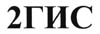
Copyright Holder — DublGIS LLC
Products/Services — 39 – provision of information in the field of traffic routes; 42 – provision of geographic maps online
Date of Public Knowledge — 01.01.2021
Number in the List - 282
Copyright Holder — Melon Fashion Group JSC
Products/Services — 25 – clothing
Date of Public Knowledge — 01.07.2023
Number in the List - 283

Copyright Holder — Savushkin Product OJSC (BY)
Products/Services — 29 – dairy products, namely: yogurt, cottage cheese
Date of Public Knowledge — 25.06.2024
Number in the List - 284
Copyright Holder — Savushkin Product OJSC (BY)
Products/Services — 29 – dairy products, namely: cheese, butter
Date of Public Knowledge — 15.05.2024
Number in the List - 285
Copyright Holder — State Corporation Rosatom
Products/Services — 01 – fuel for nuclear reactors; 04 – electrical energy; 11 – nuclear reactors
Date of Public Knowledge — 29.05.2025
Number in the List - 286
Copyright Holder — Russian Helicopters JSCbr>
Products/Services —12 – helicopters
Date of Public Knowledge — 29.07.2024
Number in the List - 287
Copyright Holder — Federal State Budgetary Cultural Institution “The State Hermitage Museum”
Products/Services —41 – museum services
Date of Public Knowledge — 19.10.1964
Number in the List - 288
Copyright Holder —Sheremetyevo International Airport JSC
Products/Services — 39 – airport activities
Date of Public Knowledge — 17.10.1992
Number in the List - 289
Copyright Holder — Jileks LLC
Products/Services — 07 – domestic water supply pumps
Date of Public Knowledge — 01.01.2019
During the same period, Rospatent refused to recognize the following designations as well-known marks:
“CITILINK” (Rospatent Decision № 2025V01314 of March 2, 2026). Citilink LLC requested recognition of this designation as a well-known trademark in relation to services in Class 35 of the Nice Classification: “retail store services for electronics and household appliances; online retail store services for electronics and household appliances.”
One of the main reasons for the refusal was that the materials submitted by the applicant showed a steady decline in the economic indicators of the Applicant’s network over the past several years in virtually all parameters, which does not allow the claimed designation to be recognized as a well-known mark. In addition, despite the positive results of a sociological survey submitted by the applicant, Rospatent did not accept them as evidence of acquisition of well-known trademark status, since the survey data was not corroborated by the remaining materials of the application.
“FANTA” and “SPRITE” (Rospatent Decisions № 2025V01404 and № 2025V01615 of March 3, 2026). The Coca-Cola Company (USA) requested recognition of trademarks under certificates № 31825 (FANTA) and № 128375 (SPRITE) as well-known marks for goods in Class 32 of the Nice Classification – “non-alcoholic beverages.” The reasons for the refusal cited by Rospatent were, first, the trend of declining sales volumes of goods under the said trademarks and their share in the “non-alcoholic beverages” sector identified from the submitted materials. Second, the submitted materials indicated use of the marks only in relation to “carbonated non-alcoholic sweet beverages”/”- carbonated lemonades,” but not other non-alcoholic beverages, such as juices, nectars, fruit drinks, kvass, etc.
Also, during the period under review, the Intellectual Property Court (IPC) upheld Rospatent’s decisions refusing to recognize the following designations as well-known marks:
 (IPC Decision of July 13, 2026 in Case № SIP‑31/2026) and “K&B” (IPC Decision of May 29, 2026 in Case № SIP‑66/2026).
At the same time, the IPC did not agree with Rospatent’s decisions regarding the designations  (IPC Decision of April 21, 2026 and Resolution of the IPC Presidium of August 18, 2026 in Case № SIP‑942/2025),
 (IPC Decision of August 17, 2026 in Case № SIP‑254/2026), and
 (IPC Decision of August 21, 2026 in Case № SIP‑286/2026), and ordered Rospatent to include these designations in the list of well-known trademarks in Russia.
2. Appellations of Origin of Goods and Geographical Indications
From March to August 2026, Rospatent registered 17 geographical indications (GI) and two appellations of origin of goods (AOG):
(Number in the Register of Geographical Indications and Appellations of Origin — Geographical indication/appellation of origin — Goods — Region)
408 (GI) — POKROVSKY PRYANIK — raw gingerbread — Pokrov, Vladimir Region
409 (GI) — STALINGRADSKY TOPOL — poplar seedlings — olgograd
410 (AOG) — ZAONEZHSKAYA VYSHIVKA — stitched embroidery items with traditional Zaonezhye embroidery — Shunga village and Medvezhyegorsk town, Medvezhyegorsky District, Republic of Karelia
411 (GI) — KOLTSOVSKOE YAYTSO — edible chicken eggs — Koltsovo urban settlement, Novosibirsk Region
412 (GI) — SMOLENSKAYA VYSHIVKA — stitched embroidery items, including home textiles and clothing — Smolensk Region
413 (GI) — BASHKIRSKIE NATSIONALNYE KOSTYUMY — national costumes — Republic of Bashkortostan
414 (GI) — VYRKOVSKAYA IGRUSHKA — clay toys — Vyrkovo village, Ryazan Region
415 (GI) — KASIMOVSKY LYAVASH — flour-based culinary product — Kasimovsky Municipal District, Ryazan Region
416 (AOG) — YAMALSKAYA REZNAYA KOST — carved items made from bones of domestic and wild animals, mammoth ivory and bone, horns of domestic animals and reindeer, with carving, inlay, and engraving — Yamalo-Nenets Autonomous Okrug
417 (GI) — SUDZHANSKAYA KERAMIKA — pottery, clay toys, tiles, shaped vessels for decorative, applied, and utilitarian purposes, small sculptures — Sudzhansky District, Kursk Region
418 (GI) — BORGOYSKAYA BARANINA — meat, meat products, lamb offal — Borgoy Steppe, located in the south of the Republic of Buryatia
419 (GI) — BALKARSKY VOYLOCHNY KOVYOR – KIYIZ — felt carpets — Kabardino-Balkarian Republic
420 (GI) — LUGANSKAYA IGRUSHKA — clay toys — Luhansk People’s Republic
421 (GI) — MARIYSKIE MNOGOSLOYNYE BLINY (KOMANMELNA) — pancakes — Republic of Mari El
422 (GI) — AGINSKAYA SHERST — sheep’s wool; sheep’s down (a type of wool fiber) — Aginsky Buryat Okrug, Zabaykalsky Krai
423 (GI) — SUDZHANSKOE KOVROTKACHESTVO — carpet products — Sudzhansky District, Kursk Region
424 (GI) — KOZHLANSKAYA IGRUSHKA — clay toys — Kozhlya village, Kursk Region
425 (GI) — YAMALSKY SHOKOLAD — chocolate products with the addition of wild berries — Yamalo-Nenets Autonomous Okrug
426 (GI) — NARYANMARSKIE CHIPS SYROVYALENYE — dry-cured venison chips — Naryan-Mar
Rospatent Refused to Grant Protection to European GIs and AOGs
In the database of the Lisbon System for the International Registration of GIs and AOGs of WIPO (Lisbon Express), refusals to grant protection in Russia to several European AOGs and GIs were published.
The refusal of AOG № AO‑1405 “Χαλλούμι/Halloumi/ Hellim” is based on the fact that, first, the designation is neither the name of any geographical object nor a derivative thereof. Second, the notification of international registration of AO‑1405 does not contain a description of all stages of production of the goods, and therefore lacks information confirming the performance of all stages of production of the goods that significantly influence the formation of the special properties of the goods within the territory of the given geographical object.
The refusal of AOG № AO‑1419 “Trento” is based on the fact that the information provided in the international register does not confirm that all stages of production of the goods that significantly influence the formation of the special properties of the goods are carried out in the territory of the relevant geographical object.
The refusal of GI № GI‑1420 “Grappa veneta/Grappa del Veneto” is based on the fact that, in Rospatent’s opinion, the international register lacks some of the necessary information, and therefore not all characteristics of the goods, largely related to their geographical origin, are confirmed.
The refusal of GI № GI‑1441 “Liquore di limone di Sorrento” is based on the fact that the notification of this international registration, in the description of the geographical object associated with the characteristics of the goods, lists, in addition to municipalities located on the Sorrento Peninsula, municipalities not located there. In this regard, in Rospatent’s opinion, the use of this GI for goods not originating from Sorrento may mislead consumers.
The refusal of GI № GI‑1442 “Vigneti delle Dolomiti/Weinberg Dolomiten” is based on the fact that the notification of this international registration lacks certain information about the characteristics of the goods and the stages of their production.
The refusal of GI № GI‑1446 “Lübecker Marzipan” is based on the fact that the notification of this international registration does not contain a full description of the characteristics of the goods, their connection with the place of origin, or a description of all necessary stages of production of the goods.
The refusal of GI № GI‑1447 “Nürnberger Bratwürste/Nürnberger Rostbratwürste” is based on the fact that in the description of the international registration, the product is referred to as “meat products (boiled, salted, smoked, etc.),” which is a general term including not only “Bratwürste” (sausages) but also other types of meat products, which contradicts the requirements of Article 1516 of the Civil Code of the Russian Federation. Furthermore, the description in the Notification lacks information on such processing methods as frying, boiling, salting, and smoking.
The refusal of GI № GI‑1448 “Oktoberfestbier” is based on the fact that the notification of international registration does not contain a description of all necessary stages of production of the final product – “beer” – and does not confirm that all stages of production of the goods that significantly influence the formation of their characteristics are carried out in the territory of the relevant geographical object.
EAPO & CIS
1. Eurasian Patent Organization
EAPO Acceded to the Patent Law Treaty (PLT)
The PLT entered into force with respect to the EAPO on March 17, 2026. For applicants, this means guarantees of flexible and convenient procedures, including with regard to establishing the filing date, meeting deadlines, and correcting formal deficiencies.
EAPO Accedes to the Geneva Act of the Hague Agreement Concerning the International Registration of Industrial Designs
- The Geneva Act entered into force with respect to the EAPO on October 10, 2026.
- The Eurasian Patent Office (EAPO) will begin accepting international applications from applicants in EAPO member states.
- The EAPO will examine international applications containing the designation of the EAPO and consider oppositions to the recognition of an international registration as invalid.
2. Belarus
Law of the Republic of Belarus № 170-Z of July 17, 2026 “On Amendments to Laws on the Legal Protection of Intellectual Property Objects”
The Law provides for amendments to all six special laws in the field of intellectual property, as well as amendments affecting intellectual property issues in the Tax Code of the Republic of Belarus, the Law of the Republic of Belarus “On Scientific and Technical Information,” and the Law “On Public Procurement of Goods (Works, Services).”
In particular, the Law provides for a reduction in the examination period for a designation applied for registration as a trademark from 2 years to 1 year; for publication of information on the grant of a patent for inventions, utility models, and industrial designs – from 3 months to 20 working days; and for the issuance of certificates for trademarks and geographical indications – from one month to 5 working days.
The Law also provides that instead of submitting a document confirming payment of the patent fee to the patent authority, it will be sufficient to indicate in the application documents information confirming payment.
Furthermore, the Law exempts patent attorneys from presenting a power of attorney when filing an application with the patent authority. However, presenting a power of attorney will be mandatory when withdrawing an application or making changes to the applicant’s indication.
The most significant innovation provided by the Law is the inclusion of provisions on compulsory licensing in the Law “On Copyright and Related Rights.” These provisions allow for the lawful use of objects of copyright and related rights without permission, but with payment of remuneration, when the author has refused to conclude or has not consented to the conclusion of a license agreement on terms consistent with established practice. A compulsory license will be issued through administrative procedure and only for the use of objects of copyright and related rights by state organizations in the context of conducting socio-political, educational, cultural, sports, and mass sports events, creating and using films, television films, video films, and other film and television works, including television programs, and broadcasting by broadcasting organizations.
3. Uzbekistan
Amendments to Certain Laws in the Field of Intellectual Property
On May 7, 2026, Law № ZRU‑1144 “On Amendments and Supplements to Certain Legislative Acts of the Republic of Uzbekistan” was adopted in Uzbekistan, which, among other things, introduced amendments to a number of laws in the field of intellectual property. The amendments entered into force on August 8, 2026.
Among other things, due to the exclusion of Part Two of Article 1104 of the Civil Code of the Republic of Uzbekistan, the issuance of a license to use a trademark is no longer considered use of the trademark for the purposes of cancellation of registration due to non-use of the trademark.
Furthermore, Article 25 of the Law on Trademarks has been supplemented with a new ground for early termination of a trademark certificate. Specifically, the certificate is terminated on the basis of a court decision made at the request of an interested party in the event of the liquidation of the legal entity that is the rightholder, as well as upon the death of an individual rightholder in the absence of heirs by will or by law.
Amendments to the Law “On State Duty” changed the fees for extending and reinstating deadlines for submitting documents during the examination of applications for inventions, utility models, and industrial designs; for registering agreements on the transfer of rights to selection achievements; for reviewing appeals and applications by the Appeals Council of the Ministry of Justice of the Republic of Uzbekistan (fees for challenging decisions on applications have increased significantly); for making changes to an application for registration of a computer program and database; and for registering an agreement on the disposal of rights to a computer program and database and amendments to such an agreement.
To access this website, we request that you read and accept the Terms of Use.