
IP News Review from Russia & CIS (September 2025 – February 2026)
28 April 2026RUSSIA:
Government Acts and Departmental Acts
Disputes over Granting and Termination of Protection
Disputes on Infringement of Exclusive Rights
Rospatent Practice
1. Well-Known Trade Marks
2. Names of Places of Origin of Goods (Poo) and Geographical Indications (Gi)
CIS
1. Eurasian Patent Organization
2. Georgia
3. Belarus
4. Kazakhstan
5. Uzbekistan
Laws and Draft Laws
Compensation for infringement of intellectual property rights — new rules (Federal Law 214-FZ dated July 07, 2025)
The law toughens penalties for the illegal acquisition, disclosure, and use of information constituting commercial, tax, or banking secrets.
On January 4, 2026, the Federal Law “On Amendments to Part Four of the Civil Code of the Russian Federation” (No. 214-FZ) came into force. It introduced, in particular, the following changes.
Article 1252 of the Civil Code of the Russian Federation (CC RF) establishes that the infringement of exclusive rights is recognized as the illegal use of one result of intellectual activity or means of individualization in any one way.
New article, Article 1252.1, sets out the general principles for determining compensation in various situations.
In particular, it provides that compensation may be collected for actions that are not formally considered infringements of exclusive rights but contribute to such infringement. This applies to actions involving the circumvention of technical copyright protection measures (Article 1299 of the CCRF) and the removal of copyright information from a copy of a work (Article 1300 of the CC RF).
It stipulates that compensation will not be collected in the event of a method of using a result of intellectual activity (RIA) or means of individualization (MI) that, in itself, has no independent economic significance but is necessary for another method of use. It is also determined that the use of a work without indicating the author, but with an indication of the source of borrowing, is not a infringement of exclusive rights if the author’s name is not included in the source of borrowing.
The new article retains three options for determining the amount of compensation:
- a fixed amount;
- an amount equal to a multiple of the value of the counterfeit goods; or
- an amount equal to a multiple of the value of the right to use the object of rights under comparable circumstances.
The court has the right to award compensation in a fixed amount even if the plaintiff has chosen a different compensation calculation option, but the court finds that the plaintiff’s chosen method of calculating compensation is inapplicable to the circumstances of the infringement of the exclusive right.
The new article also details the procedure for calculating compensation in cases where multiple results of intellectual activity (RIA) or means of individualization are illegally used in a single counterfeit tangible medium, as well as when multiple individuals independently violate exclusive rights using the same counterfeit tangible medium.
In the latter case, the court may award compensation jointly and severally to the infringers. It is established that, where the results of intellectual activity or means of individualization work belongs to several right holders, the compensation collected by any of them for the infringement of the exclusive right to such an object must be distributed among all right holders.
It has also been established that the court may determine the amount of compensation below the limits specified by the Civil Code of the Russian Federation (in particular, within the range of ten thousand to five hundred thousand rubles or within the range of one to two times the cost of counterfeit material media or the right to use an intellectual property object), if the infringer — an individual entrepreneur — did not know and should not have known that he was committing a infringement of an exclusive right.
The article establishing the specifics of protecting the rights of a licensee (Article 1254 of the CC RF) additionally stipulates that the claims of the right holder and the exclusive licensee who have filed a claim for compensation in court are joint and several.
The articles defining liability for infringement of exclusive rights to certain intellectual property objects (Articles 1301, 1311, 1406.1, 1515, and 1537 of the CC RF) establish minimum and maximum compensation limits. In particular, the maximum compensation for infringement of exclusive rights to a work, related rights, invention, utility model or industrial design and for the illegal use of a trademark has increased from five to ten million rubles. For patent rights, the minimum compensation has also increased (from ten to fifty thousand rubles). For geographical indications (GIs) and appellations of origin (AOGs), compensation is only possible in a fixed amount. The amendments that have entered into force are aimed at establishing a fairer amount of compensation for the infringement of exclusive rights to intellectual property, taking into account all the circumstances of such infringement.
According to paragraph 25 of Resolution No. 10 of the Plenum of the Supreme Court of the Russian Federation, penalties for infringement of results of intellectual activity and means of individualization are applied based on the legislation in effect at the time of the infringement. This means that the new rules for determining compensation only apply to infringements committed after January 4, 2026.
Economic support measures have been extended (Federal Law No. 463-FZ dated December 15, 2025)
In particular, the Government’s right to determine the list of goods for parallel imports has been extended for 2026.
On patenting IT inventions (Draft Law No. 922784–8 dated May 21, 2025)
In November 2025, the draft law “On Amendments to Part IV of the CCRF” (draft No. 922784–8 dated May 21, 2025) (on the legal regime of programmable means as objects of patent law) was approved by the State Duma in the first reading.
According to the draft law’s authors, the proposed amendments will make it possible to grant patent protection to technical solutions implemented by a programmable device (computer) under the control of a computer program. As stated in the explanatory note to the draft law, the proposed amendments “allow for the possibility of obtaining patent protection for inventions that use machine learning systems, including deep learning, known as ‘artificial intelligence.’”
Articles 1350 and 1351 of the CC RF propose specifying that a technical solution implemented in a programmable means, or related to a method implemented using such a means, is also protected as an invention; and a technical solution implemented in a programmable device is also protected as a utility model.
Furthermore, with regard to industrial designs, the draft law provides for an amendment to Article 1352 of the CC RF specifying that the graphical interface of a computer program or its component part, which has independent significance, is also protected as an industrial design.
The draft law also proposes expanding the product categories that inventions may include (in addition to devices, substances, microbial strains, and plant or animal cell cultures) to include “systems” and “complexes,” as well as “protein and genetic constructs.” As a result, it proposes legislatively codifying Rospatent’s established practice of protecting utility models, according to which systems and complexes are not included within the definition of devices and cannot be protected by a utility model patent.
The Government submitted an official response to the draft law to the State Duma, noting that the application of the provisions proposed in this paragraph could lead to the blurring of distinctions in patent protection between inventions and utility models. This could contribute to abuse of rights, including the use of utility model patents by unscrupulous market participants. Therefore, it would be appropriate to exclude paragraph 3 of Article 1 of the draft law.
Government Acts and Departmental Acts
The Government amended the Regulation on Patent Fees (Government Decree No. 1459 dated September 23, 2025)
A key change is the introduction of an additional fee for depending on the number of goods and services declared within a single class of the Nice Classification.
Previously, the fee was determined solely by the number of classes; now, the size of the list within each class is also taken into account. Specifically, the fee for examining a declared designation and for extending trademark protection for another 10‑year period is increased by 500 rubles for each product or service in the list of goods and services in a single class, exceeding 10.
In addition, another amendment has been made to the Regulation on Patent Fees, according to which federal government bodies, government bodies of the constituent entities of the Russian Federation, as well as the State Atomic Energy Corporation “Rosatom” and the State Corporation for Space Activities “Roscosmos”, are exempt from paying a number of fees, namely for the registration of an invention, utility model, industrial design, publication of information on the issuance of a patent, the issuance of a patent and maintenance of a patent in force, as well as for the examination of an application for a trademark and for the extension of the term of protection of a trademark, when these state corporations exercise their powers to manage the rights belonging to the Russian Federation to the results of intellectual activity and equivalent means of individualization.
The changes came into force on October 4, 2025.
The possibility of anonymous publication of information in the Rospatent’s bulletins has been extended for another year (Government Decree No. 2202 dated December 29, 2025)
Until December 31, 2026, at the request of the applicant for registration of an invention, utility model, industrial design, trademark, computer program, database, integrated circuit topography or the holder of exclusive rights to the results of intellectual activity and means of individualization, as well as at the request of the parties to an agreement on the disposal of exclusive rights to the results of intellectual activity and means of individualization, Rospatent will not publish information about the such persons in its official bulletins.
The Government has given permission to use Novo Nordisk (Denmark) inventions in the interests of protecting the life and health of citizens (Government Orders No. 3572‑р dated December 2, 2025, No. 3885‑р dated December 19, 2025 and No. 3931‑р dated December 20, 2025,)
In accordance with Article 1360 of the CCRF, due to urgent necessity related to the protection of life and health of citizens, in order to provide the population of Russia with medicinal products based on the active substance “semaglutide”, the Government has permitted LLC GEROPHARM, LLC Promomed Rus and LLC PSK Pharma to use inventions protected by patents No. 2434019, 26435 15, 2657573, 2768283, 2777600, owned by Novo Nordisk A/S (Denmark), without the consent of the patent holder. Permits are valid until the end of 2026.
The Government has given permission to use Dong-A ST (Republic of Korea) and Merck Sharp & Dohme (USA) inventions in the interests of protecting the life and health of citizens (Government Order No. 3997‑р dated December 23, 2025)
In accordance with Article 1360 of the CC RF, due to urgent necessity related to the protection of life and health of citizens, in order to provide the population of Russia with medicinal products based on the active substance “tedizolid”, the Government has permitted LLC PSK Pharma to use inventions protected by patent No. 2414469 of Dong-A ST (Republic of Korea) and patents No. 2556234 and 2555928 of Merck Sharp & Dohme (USA). The permit is valid until the end of 2026.
The Government is reducing the time limits for consideration by authorized bodies of applications regarding registered AOGs (Government Decree No. 165 dated February 19, 2026)
A petition regarding the disappearance of conditions characteristic of a geographical area and the impossibility of producing a product with special properties specified in the State Register of Geographical Indications and Appellations of Origin may be filed by any person. Such a petition is submitted to the authorized body designated in accordance with paragraph 2 of Article 1522.1 of the CCRF.
The Decree shortens the time limits for certain procedures performed by authorized bodies when reviewing such applications. Overall, the time limit for an authorized body to review such an application is reduced by approximately two months.
Amendments have been made to the list of goods permitted for parallel import (Order of the Ministry of Industry and Trade No. 4769 dated September 26, 2025)
An Order of the Ministry of Industry and Trade amended the list of imported goods (groups of goods) to which the provisions of the CC RF on the protection of exclusive rights do not apply, provided that such goods are placed into circulation outside the territory of the Russian Federation by the rights holders or with their consent.
In particular, Ricoh toner/inks and printing equipment, Biorepair oral hygiene products, Braun electric shavers, Trimble receivers, and Spin Master games are excluded from the list, as well as brands Torneo, Oral-B, Amazone, etc. At the same time, medical products under the A&D brand have been added to the list.
The Ministry of Industry and Trade also prepared and submitted for discussion a draft order on a new format for the list of parallel imported goods (a href="https://regulation.gov.ru/projects/160675" target="_blank">ID: 160675).
A different structure for the List has been proposed, one that is more convenient for practical use. The List is proposed to include not only the verbal element of a trademark, but also the trademark registration number. This will allow parallel imports to be extended to all types of trademarks, including figurative and combined marks.
Amendments have been made to departmental documents regulating the activities of patent attorneys (Order of the Ministry of Economic Development No. 1 dated January 12, 2026)
Due to the fact that Article 48 of Federal Law No. 304-FZ dated July 31, 2025 introduced a number of amendments to the Law “On Patent Attorneys”, it was necessary to bring the provisions of documents regulating the procedure for certification and registration of patent attorneys into line with these amendments.
In particular, the Order approved new versions of the following documents:
- Procedure for the activities of the Qualification Commission;
- Procedure for the activities of the Appeal Commission;
- Procedure for maintaining the Register of Patent Attorneys of the Russian Federation (hereinafter referred to as the Register);
The following application forms also have been approved:
- on certification as a patent attorney
- on making changes to the Register;
- on the correction of typos and (or) errors in the Register;
- on the exclusion of a patent attorney from the Register;
- on the restoration of the registration of a patent attorney in the Register;
- on providing an extract from the Register.
The Order entered into force on March 1, 2026. At the same time, the Order of the Ministry of Economic Development No. 455 dated July 10, 2025, which had approved similar documents and which entered into force on September 1, 2025, was declared invalid.
The Government of the Russian Federation approved the Rules for the provision of genetic material of created intellectual property objects to the bioresource center (Government Decree No. 1369 dated September 4, 2025)
The Rules define the procedure and conditions for the provision by organizations under the jurisdiction of federal government agencies of genetic material of created objects of intellectual property rights (plant variety, animal breed, microorganism strain (except for pathogenic microorganisms and viruses), plant or animal cell culture) to the bioresource center.
When providing such materials to a bioresource center, information must be provided in accordance with the biological sample certification system provided by the bioresource center, as well as other information stipulated by the agreement on the provision of genetic material.
Certain purposes for providing materials to the Bioresource Center are defined, including deposit for purposes of the patent procedure. A procedure for the voluntary transfer of genetic materials to the Center is established. Certain issues of depository storage, deposit and preservation of materials have been settled.
The list of collections for depositing biomaterials for the purposes of the patent procedure has been expanded (Order of the Ministry of Economic Development No. 94 dated February 9, 2026)
The Rules for drafting, filing and reviewing applications for inventions and the requirements for application documents for an invention have been supplemented to provide that, for the purposes of the patent procedure, it is possible to deposit biological material in a bioresource center established in accordance with paragraph 16 of Part 1 of Article 2 of the Federal Law No. 428-FZ dated November 30, 2024 and designated by the Government of the Russian Federation in accordance with paragraph 9 of the Rules for the provision of genetic material of created intellectual property objects to the bioresource center, approved by Government Decree No. 1369 dated September 4, 2025 (see above).
Disputes over Granting and Termination of Protection
In a dispute over the early termination of legal protection of a trademark due to non-use, the Supreme Court pointed out the need to prove not only the intention to use the trademark, but also the actual legal possibility of using the disputed designation (Resolution of the Supreme Court of the Russian Federation No. 300-ЭС25–2343 dated October 6, 2025, on case No. SIP‑1077/2023)
JSC Aeroplan owns trademark No. 502206, protected for goods of classes 20 and 28 and services of class 35 of the International Classification of Goods and Services (hereinafter referred to as the Trademark).
 LLC Nika Mebel filed a claim with the Intellectual Property Court (IP Court) against JSC Aeroplan for the early termination of its trademark protection for goods in classes 20 and 28 and services in class 35 of the International Classification of Goods and Services for the Purposes of Registration of Marks (hereinafter referred to as the ICGS), for which the trademark is registered, due to non-use. Nika Mebel justified its legal interest by the fact that the rights holder had filed a lawsuit against it for infringement of the right to the Trademark, during the consideration of which the fact of Nika Mebel’s use of a designation that was identical or similar to the extent of confusion to the Trademark was confirmed.
The IP Court recognized LLC Nika Mebel’s legal interest in various furniture items classified in Class 20 of the Nice Classification and cancelled trademark protection for these items early. The Presidium of the IP Court concurred with this decision.
The rights holder filed a cassation appeal to the Supreme Court, which overturned the IP Court’s decisions and remanded the case for a new trial. The Supreme Court’s reasoning was as follows.
The trademark contains a graphic image of the character Simka from the animated film “The Fixies”. JSC Aeroplan also holds the exclusive right to this character. If the trademark’s legal protection is terminated, subsequent use by the plaintiff (or any third party) of the image included in the trademark will infringe the exclusive right to the character as a copyrighted object.
The Supreme Court indicated that the court, in establishing the plaintiff’s legal interest in the early termination of legal protection for a trademark, in addition to the circumstances confirming the potential possibility of using the disputed designation, the court should have assessed the reality of the intention. In particular, the court should have impose on the plaintiff the obligation to present evidence confirming its ability to lawfully use the disputed designation after the termination of its legal protection, which the court failed to do.
Following the Supreme Court’s instructions, the IP Court re-examined the dispute regarding the early termination of trademark protection containing the image of the character Simka from the cartoon “The Fixies”.
This time, the IP Court dismissed the claim entirely for lack of legal interest, considering that even if trademark protection were terminated, the plaintiff would be unable to use the relevant designation, as doing so would infringe copyright.
Thus, proving legal interest may be complicated in cases where a trademark contains a copyrighted object.
In a dispute over invalidating the granting of protection to a trademark, the IP Court explained to Rospatent how to compare designations and determine the homogeneity of goods (IP Court decision dated September 11, 2025 on case No. SIP‑1141/2024)
According to Rospatent, these trademarks are similar, and, taking into account the consent letter submitted by the applicant, Rospatent considered it possible to register the mark of LLC Bit Trade for goods of 9 and services of 38 classes of the International Classification of Goods and Services.
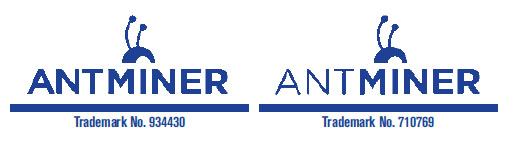 Bitmain Technologies Inc. together with Bitmain Technologies Limited filed an objection to the registration of the trademark of LLC Bit Trade, noting, among other things, that the disputed trademark and trademark No. 710769 are substantially identical, and the letters of consent submitted with the application issued to LLC Bit Trade for the registration of the disputed trademark on behalf of Bitmain Technologies Limited and Bitmain companies Technologies Inc., as well as the official dealer certificate, are fake, since the applicants never issued these documents.
In its Opinion on the results of its review of the objection, Rospatent stated that the differences in the spelling of the letter combination “ANT” in the word element indicate a lack of identity between these trademarks, and that assessment of the falsification of letters of consent and the dealer certificate is not provided for by the procedure for reviewing objections. Rospatent therefore refused to satisfy the objection.
Disagreeing with the decision of Rospatent, the companies appealed to the court (case No. SIP‑1141/2024).
The IP Court independently analyzed the trademarks and concluded that they were legally identical. Therefore, the consents of the owners of earlier marks cannot be taken into account with respect to the claimed mark. Furthermore, the IP Court independently assessed the homogeneity of the goods and services in the disputed and opposing marks and found them to be similar to varying degrees. As regards the companies’ arguments about the falsification of the letters of consent and dealer certificates, the court critically assessed the documents and found them legally invalid due to the fact that they had not been issued by authorized persons in the prescribed manner.
According to the IP Court, Rospatent, in infringement of established requirements, failed at he examination stage to properly verify the authority of the person who signed the letters of consent. The court emphasized that this requirement was not excessive and did not require Rospatent to verify the document for falsification.
The IP Court fully invalidated the disputed trademark and ordered Rospatent to pay court costs in the amount of 100,000 rubles.
Disputes on Violetion of Exclusive Rights
According to the court, the right to use the company name is transferred to another person as a result of the reorganization (Ruling of the IP Court dated December 19, 2025 on case No. A03–11405/2024)
LLC Altayskiye luga (hereinafter referred to as the Company) owns trademark No. 670510 (hereinafter referred to as the Trademark), with a priority date July 11, 2017 and registration date of September 12, 2018.
 The Company filed a claim with the Arbitration Court of the Altai Territory against JSC Agricultural Enterprise “Altayskiye Luga” (hereinafter referred to as the Enterprise) demanding that the Enterprise cease using a designation similar to the Trademark in its company name and domain name and pay compensation to the Company for the infringement of the exclusive right to the Trademark. Courts of three instances denied the Company’s claims. In doing so, the courts took into account the following.
The defendant enterprise was established on September 13, 2019, and on April 2, 2021, the LLC Agricultural Enterprise Alpiyskie Luga, established on March 14, 2018, was merged into it as a result of the reorganization.
Based on this, the courts established that “the company name “Altayskiye luga” arose for the defendant Enterprise as a result of the reorganization of the legal entity in the form of the merger with the LLC Agricultural Enterprise “Altayskiye luga”, the name of which arose on March 14, 2018.”
In turn, legal protection for the plaintiff’s trademark was granted on September 12, 2018. Thus, the courts established that “the defendant’s exclusive right to the company name arose prior to the plaintiff’s exclusive right to the business identifier.”
Thus, the courts found that the Enterprise had proven the legality of its use of the relevant company name, and therefore no infringement of the exclusive right to the Trademark exists.
Other Disputes
The Supreme Court concluded that license fees are payable for the period before the patent is declared invalid if the license agreement was performed by the parties in reliance of the validity of the patent (Ruling of the Supreme Court of the Russian Federation No. 310-ЭС25–9110 dated December 3, 2025 on case A09–4451/2022)
LLC Diprom (hereinafter referred to as the Company) filed a claim with the Arbitration Court of the Bryansk Region against LLC Bryansk Plant of Absorbing Apparatus (hereinafter referred to as the Plant) for the recovery of arrears in the payment of license fees.
On June 2, 2017, the Company (licensor) and the Plant (licensee) entered into a sublicense agreement valid until December 23, 2020. The parties agreed on the terms and conditions for the licensee to pay the licensor a royalty based on the volume of use.
By decision of the Federal Service for Intellectual Property dated October 30, 2021, the patent was declared invalid in its entirety.
In the lawsuit, the Company indicated that the licensee failed to pay royalties for six months (from July to December 2020), while the agreement for the use of the invention was still in effect.
The court of first instance dismissed the claim, finding that invalidating of the patent would terminate all obligations under the license agreement. The appellate and cassation courts upheld the court’s findings.
The Supreme Court of Russia reviewed the case materials and overturned the adopted judicial decisions based on the fact that if a patent for an invention is declared invalid, the licensor nonetheless has the right to demand payment for the period during which the license agreement was performed by the parties, relying on the validity of the patent.
The Supreme Court overturned the lower courts’ rulings and remanded the case for a new trial to the Bryansk Regional Arbitration Court. It also found that the trial court had failed to properly investigate the circumstances of the contract’s performance, had failed to meaningfully evaluate the reports submitted by the Plant, had failed to verify the existence and amount of the debt, and that the appellate and cassation courts had failed to correct these infringements.
The Supreme Court considered a dispute regarding the registration of the transfer of rights to trademarks in bankruptcy (RRuling of the Economic Disputes Panel of the Supreme Court of the Russian Federation No. 305-ES25–11634, dated February 2, 2026 on the case No. A40–180253/2024)
An entrepreneur filed a lawsuit demanding that Rospatent register the transfer of exclusive rights to his trademarks. He substantiated his claim by stating that he had entered into an agreement to assign rights to three trademarks and applied for registration. However, it turned out that the owner of the disputed trademarks had been declared bankrupt, requiring the consent of the debtor’s bankruptcy trustee to register. The entrepreneur failed to provide such consent, and the state agency denied his application.
Three courts sided with the entrepreneur. They assumed that the trademark transfer agreement had been concluded before the bankruptcy proceedings began. The transfer of rights also occurred at that time. This meant that the trademarks are not included in the bankruptcy estate. Moreover, the intellectual property transfer agreement has been concluded pursuant to a settlement agreement approved by the court.
Rospatent filed a complaint with the Supreme Court of Russia, noting that the exclusive rights had not transferred to the applicant at the time the original owner was declared bankrupt and were included in the bankruptcy estate.
Therefore, only the debtor’s bankruptcy trustee could dispose of them, and the settlement agreement itself could not provide evidence of the possibility of state registration.
The Supreme Court’s Economic Disputes Panel upheld Rospatent’s arguments, overturned the judgments, and ruled to dismiss the entrepreneur’s claims.
Rospatent Practice
1. Well-known trademarks
For the period from September 2025 to February 2026, Rospatent, including in accordance with decisions of the Intellectual Property Court, recognized the following trademarks as well-known:
Number in the List - 273
Copyright Holder —JSC AB InBev Efes
Products/Services —32 — beer
Date of Public Knowledge — 01.01.2022
Number in the List - 274
Copyright Holder — PJSC Gazprom Neft
Products/Services — 04 — motor oil
Date of Public Knowledge — 6.08.2024
Number in the List - 275

Copyright Holder — LLC Glavspirttrest
Products/Services — 33 — vodka
Date of Public Knowledge — 1.01.2019
Number in the List - 276
Copyright Holder — JSC Rust Russia
Products/Services — 33 — vodka
Date of Public Knowledge — 1.01.2024
Number in the List - 277
Copyright Holder — PJSC Gruppa Cherkizovo
Products/Services — 29 — ham; sausage products; pork; semi-finished pork products
Date of Public Knowledge — 1.12.2023
Number in the List - 278
Copyright Holder — JSC Technologicheskaya Companiya Centr
Products/Services — 28 — lottery tickets; 35 — lottery distribution services; lottery ticket retail services
Date of Public Knowledge — 31.12.2023
Number in the List - 279
Copyright Holder — LLC Vologodskoe morozhenoe
Products/Services —30ice cream
Date of Public Knowledge — 1.01.2024
Number in the List - 280
Copyright Holder —FGBOU VO «RANHiGS»
Products/Services — 41 — education
Date of Public Knowledge — 1.01.2024
 In addition, Rospatent, having considered the objection of LLC Apteka Vitaexpress, upheld the legal protection of well-known trademark No. 220 (Rospatent’s decision dated November 18, 2025, No. 2025B00023).
During the same period, Rospatent refused to recognize the following designations as well-known marks:
"Blefarogel" (Rospatent's decision dated October 17, 2025, No. 2024B01970). Sole proprietor S.Y.Kirsh requested that this designation be recognized as a well-known trademark in relation to goods of class 03 of the International Classification of Goods and Services "gels for the skin around the eyes for cosmetic use" and class 05 of the International Classification of Goods and Services "medical gels for the treatment of the skin around the eyes". One of the main reasons for this refusal decision was that the claimed designation "Blefarogel" in the minds of Russian consumers cannot be associated exclusively with the applicant, since the economic activity involving the use of this designation, including the production and sale of the claimed goods, is carried out not by the applicant, but by another entity - Geltek-medika LLC.
 (Rospatent's decision dated October 17, 2025, No. 2024B02974). LLC Stroitelnyy torgovyy dom "Petrovich" requested that the designation be recognized as a well-known trademark in relation to services of class 35 of the International Classification of Goods and Services: "services of stores for retail and wholesale sale of goods for repair, construction work, goods for the home, garden, vegetable garden, and recreation; services of retail and wholesale sale of goods for repair, construction work, goods for the home, garden, vegetable garden, and recreation using Internet sites; supply services for third parties [purchase and provision of entrepreneurs with goods for repair, construction work, goods for the home, garden, vegetable garden, and recreation]". From the documents submitted by the applicant, it was established that the applicant’s offline stores are located in 6 constituent entities of the Russian Federation, which does not allow one to conclude that the consumer is aware of the declared designation throughout the territory of Russia. There is no information on advertising activities related to the provision of the requested services in the regions to which goods from Petrovich stores are delivered. The sociological survey submitted by the applicant also failed to convince Rospatent that the claimed designation possesses the properties of a well-known trademark.
"KOTOFEY" (Rospatent's decision dated October 30, 2025, No. 2024B04225). JSC Yegoryevsk-Obuv requested that the trademark under certificate No. 684767 be recognized as a well-known trademark in relation to goods of class 25 of the International Classification of Goods and Services – "footwear".
The reasons for this refusal decision include the following:
- the applicant’s goods, namely footwear for children and teenagers, do not cover other types of the generic group of goods of class 25 of the International Classification of Goods and Services "footwear" (men’s, women’s, sports, etc.);
- the offer for sale and sale of the applicant's goods is carried out through the KOTOFEY chain of stores and on popular Internet sites using a trademark other than the one declared, namely a combined designation that includes a pictorial element.
The applicant requested clarification of the list of goods in class 25 of the International Classification of Goods and Services, "children’s and teenagers’ footwear" but was denied because this wording was not included in certificate No. 684767.
"TOCHKA" (Rospatent's decision dated October 30, 2025, No. 2024B04207). JSC Tochka requested recognition of its trademark as a well-known trademark for services falling under class 36 of the International Classification of Goods and Services, "Banking Services." The materials submitted by the applicant were largely rejected as evidence of the actual provision of banking services to consumers, preventing a conclusion regarding the extent of use of the claimed trademark. The results of the sociological survey submitted by the applicant did not allow for determining the geographic scope of the audience participating in the study, and the insufficient number of respondents made it impossible to obtain objective data on the level of awareness of the claimed trademark.
"DOMKLIK" (Rospatent's decision dated October 30, 2025, No. 2024B04027). LLC Domklik requested that the designation be recognized as a well-known trademark in relation to services of class 36 of the International Classification of Goods and Services "intermediary services in real estate transactions", but was unable to prove that, as of the requested date (December 1, 2024), the designation "DOMKLIK" had become widely known specifically in relation to the applicant, since most of the services provided by the applicant are marked using the well-known trademark No. 260  , which belongs to another legal entity - PJSC Sberbank. This did not allow an unambiguous conclusion to be drawn about the wide recognition of the claimed designation "DOMKLIK" in relation to the declared services and in relation to the applicant.
"K&B" (Rospatent's decision dated October 30, 2025, No. 2024B03648). LLC Alfa-M requested recognition of the designation as a well-known trademark in relation to services under Class 35 of the International Classification of Goods and Services, "services of stores for the retail sale of goods." The main reason for the refusal was that the documents submitted indicate the applicant's intensive use of other combined designations, rather than the claimed "K&B".
 "FARADEY" (Rospatent's decision dated December 18, 2025, No. 2024B04180). JSC Companiya "FARADEY" requested recognition of the designation as a well-known trademark in relation to goods of class 25 of the International Classification of Goods and Services "footwear for military personnel, namely boots, shoes." The applicant failed to prove the well-known nature of the designation claimed by him for a number of reasons, in particular:
- the sale of goods is carried out using a combined designation ;
- the results of the sociological survey of consumers do not prove the real association of the declared designation with the declared goods.
 (Rospatent's decision dated December 30, 2025 No. 2024B04231). LLC Umnyy Retail requested recognition of the designation as a well-known trademark in relation to services of class 35 of the International Classification of Goods and Services, "services for the retail sale of food products via a mobile application", and services of class 39 of the International Classification of Goods and Services, "delivery of food products". The applicant's presence is not in all constituent entities of the Russian Federation and the applicant advertises its services only in its locations did not allow Rospatent to conclude that the claimed designation has been widely known to a large number of people throughout Russia for a long time. The results of the consumer survey submitted by the applicant were critically assessed by Rospatent and did not convince it that the claimed designation has become widely known to consumers.
 (Rospatent's decision dated December 30, 2025, No. 2024B04096). LLC LEVEL GROUP requested recognition of the designation as a well-known trademark in relation to services of class 35 of the International Classification of Goods and Services "sale of real estate", services of class 36 of the International Classification of Goods and Services, "housing management, real estate management" and services of class 37 of the International Classification of Goods and Services, "construction". With regard to the materials provided by the applicant, the Rospatent's decision notes that they cover short periods of time and contain information on the provision of certain declared services primarily in Moscow and the Moscow region using a designation different from the declared one. This did not allow Rospatent to establish the fact of widespread use of the claimed designation for identification of the declared services in the territory of the Russian Federation over a long period of time.
2. Appellations of Origin of Goods and Geographical Indications
In March-August 2025, Rospatent registered geographical indications (GI) and Appellations of origin of goods (AOG):
(Number in the Register of Geographical Indications and Appellations of Origin — Geographical indication/appellation of origin — Goods — Region)
385 (GI) — TASHLINSKY QUARTZ SAND — quartz sand — Tashlinskoye quartz sand deposit, Sengileevsky district, Ulyanovsk region
386 (AOG) — BELYOVSKAYA MERINGUE — meringue — Belyovsky District of the Tula Region
387 (GI) — SARATOVSKOE SUNFLOWER OIL — sunflower oil — Saratov Region
388 (GI) — MORDOVIAN VODKA — vodka — Republic of Mordovia
389 (GI) — VASILIEVSKY MOSS PEAT SOILS — peat soils — Vasilievsky Mokh settlement, Kalininsky District, Tver Region
390 (GI) — YAKUT HIGH GRAIN FOOTWEAR — unty (fur footwear) — Republic of Sakha (Yakutia)
391 (GI) — TAMBOV POTATOES — potato — Tambov Region
392 (GI) — LUGANSK ICE CREAM — ice cream — Luhansk People's Republic
393 (GI) — KARACHAY AYRAN — ayran — Karachay-Cherkess Republic
394 (GI) — SHCHUCHANSKY CHEESE — semi-hard cheese — the village of Shchuchye, Liski municipal district, Voronezh region
395 (GI) — KARELIAN PASTILA — marshmalloows — Republic of Karelia
396 (GI) — PSKOV SNAIL — baked snail (culinary dish) — Pskov Region
397 (GI) — CHUMIKANSKAYA CAVIAR — granular salted salmon caviar — Tuguro-Chumikansky District of Khabarovsk Krai
398 (GI) — TULA CERAMICS — household and everyday objects made on a potter's wheel or by hand-molding; relief glazed tiles and souvenir items based on them; plain painted tiles and souvenir items based on them; clay toys and small clay items — Tula Region
399 (GI) — YEISK BALM — non-alcoholic beverages made from plant-based ingredients (non-alcoholic herbal balms) — Yeisk district of Krasnodar Krai
400 (GI) — YAKUT "DYABAKA" HEADDRESS — headdress — Republic of Sakha (Yakutia)
401 (GI) — SASOVSKY CHIBRIK — pies — Sasovo, Ryazan Region
402 (GI) — SAPOZHKOVSKAYA (ALEXANDRO-PRASKOVINSKAYA) CLAY TOY — clay toy — Sapozhkovsky district of the Ryazan region
403 (GI) — TALITSKOYE MILK — pasteurized drinking milk — Talitsky urban district of the Sverdlovsk region
404 (GI) — PAVLOVSKY LEMON — indoor lemon tree seedlings — the town of Pavlovo, Pavlovsky District, Nizhny Novgorod Region
405 (GI) — GINGERBREAD SMOLENSKY — printed gingerbread cookies — Smolensk region
406 (GI) — GLUSHKOVSKAYA CERAMICS — pottery and ceramic products for artistic, decorative, and utilitarian purposes — Glushkovsky district of Kursk region
407 (GI) — SAMORYADOVSKOYE PATTERNED WEAVING — woven products for artistic, decorative and utilitarian purposes — Samoryadovo village Bolshesoldatsky district of Kursk region
Vologda lace is denied protection in Europe (Bulletin of the Lisbon System, WIPO 2025, No. 54.4)
As with the AOG Gzhel (No. 2 in the Russian Register of Appellations of Origin and Geographical Indications; No. AO-1397), an attempt to obtain protection for the Russian AOG Vologda lace (No. 3 in the Russian Register of Appellations of Origin and Geographical Indications) through the Lisbon System for International Registration at WIPO (No. AO-1422 in the Lisbon Registry) resulted in refusals by EU countries. Refusal notices were sent to WIPO in November 2025 and published in the WIPO Bulletin.
The notifications stated two reasons for the refusal. First, protection of GIs and AOGs for such goods (crafts) had not yet entered into force in the EU at the time the refusal decision was made (it is effective from December 1, 2025). Second, in accordance with the 14th package of European sanctions against Russia, applications from Russian applicants for the protection of GIs and AOGs in EU countries are not accepted, including through the Lisbon System.
EAPO & CIS
1. Eurasian Patent Organization
Changes in the amounts of some EAPO fees
Effective February 1, 2026, new fees of the Eurasian Patent Organization have been established for actions related to applications for Eurasian patents for inventions and industrial designs and Eurasian patents for inventions and industrial designs. Many fees have been significantly increased, and some fees have been increased by multiples.
Amendments have been made to the Patent Regulations concerning the examination of inventions and industrial designs
OThe changes affect issues of obtaining protection for inventions and industrial designs.
In particular:
- the provisions on the novelty exemption (Rule 3(2) of the Regulations) do not apply to disclosure in a "publication of patent documents";
- among the subject matter excluded from protection in Rule 3(4) of the Regulations are methods of cloning a human being and his clone, methods of modifying the genetic integrity of human germline cells and the use of human embryos for industrial and commercial purposes;
- Rule 16 lists the conditions for extending the validity period of a Eurasian patent for certain inventions beyond 20 years;
- Rule 24 sets the upper limit for extending procedural deadlines at 24 months;
- Rule 42 states that the office may request the applicant information on patent searches carried out by international search authorities or national offices in relation to applications belonging to the same patent family as the Eurasian application;
- Rule 49 clarifies the conditions for the applicant to amend the claims of an invention at the stage of substantive examination of the application: the amendments must relate to the invention (group of inventions) in relation to which a patent search was conducted and a fee was paid for the substantive examination of the Eurasian application, in compliance with the requirement of unity of invention.
Other changes concern supplementing of the Patent Regulations with an indication that certain details are to be established by the President of the Eurasian Patent Organization.
The main changes in terms of industrial designs are as follows:
- the range of solutions that are not granted legal protection as industrial designs due to their identity or similarity to the point of confusion with trademarks has been clarified (Rule 78(6)(d));
- the validity of a Eurasian patent for an industrial design may be extended both in relation to all industrial designs specified in the Eurasian patent and in relation to individual industrial designs specified therein (Rule 88(3));
- the validity of a Eurasian patent for an industrial design may be challenged administratively during the entire term of the patent (Rule 116(2));
- The Implementing Regulations (Rule 77 and new Chapter IX1) have been supplemented with provisions necessary for the possible participation of the EAPO in the Geneva Act of the Hague Agreement Concerning the International Registration of Industrial Designs, the decision on the accession of the EAPO to which was taken at the meeting of the Administrative Council in Ashgabat (Turkmenistan) in mid-October 2025
2. Georgia
Georgia joined the Lisbon system of registration of GIs and AOGs
On October 14, 2025, the Geneva Act of the Lisbon Agreement on Appellations of Origin and Geographical Indications (hereinafter referred to as the Geneva Act) entered into force for Georgia. From this date, Georgia can be included in international applications for registration of GIs and AOGs under the Lisbon system.
3. Belarus
On the draft amendments to legislation on IP protection
On February 11, 2026, at a plenary session of the House of Representatives of the National Assembly of the Republic of Belarus (RB), the draft Law "On Amending Laws on the Legal Protection of Intellectual Property Objects" (draft law), submitted by the Belarusian government, was considered and adopted in the first reading.
The draft Law was developed with the aim of comprehensively adjusting the laws of the Republic of Belarus in the field of intellectual property.
The draft law, in particular, provides for:
- optimization of administrative procedures carried out by the patent authority (National Center for Intellectual Property) within the framework of activities to provide legal protection to intellectual property objects;
- establishing the procedure for registering with the patent authority agreements on the pledge of exclusive rights in relation to inventions, utility models, industrial designs, plant varieties, and topographies of integrated circuits;
- clarification of the procedure for paying remuneration to authors for the use of scientific works, inventions, utility models, industrial designs, plant varieties, integrated circuit topologies, and production secrets (know-how);
- establishing the possibility of use under statutory licensing of musical works without the consent of the authors or other right holders (with payment of remuneration to them) in the creation and (or) distribution by the editorial staff of television media of individual television programs from the composition of television programs included in the mandatory publicly available package of television programs.
In addition, in order to bring laws into line with the Civil Code of the Republic of Belarus and the Code of Civil Procedure of the Republic of Belarus, certain terms and the term of validity of the exclusive right to works of science, literature and art (during the life of the author and 70 years after his death) have been clarified.
The draft law also exempts applicants from providing proof of payment of the patent fee. The patent authority will verify payment through information systems, using only the information provided by the applicant confirming payment of the patent fee.
In addition, the draft law provides for a reduction in the time limits for certain actions related to the legal protection of industrial property rights.
The draft law also eliminates provisions from intellectual property laws requiring the submission of a power of attorney to the patent authority when filing an application. The conditions and requirements for submitting a power of attorney to the patent authority will be determined by the Government (for example, when withdrawing an application or amending the applicant's name).
The draft law also provides for other changes to laws in the area of intellectual property.
The draft law is scheduled to be considered in its second reading in the first half of 2026.
4. Kazakhstan
Kazakhstan joined To Marrakesh agreement
On October 14, 2025, the Marrakesh Treaty to Facilitate Access to Published Works for Persons Who Are Blind, Visually Impaired, or Otherwise Print Disabled entered into force with respect to Kazakhstan.
Changes have been made to a number of laws in the field of intellectual property
On January 25, 2026, the Law of the Republic of Kazakhstan dated November 24, 2025 No. 233-VIII ZPK "On Amendments and Additions to Certain Legislative Acts on Intellectual Property Issues" came into force.
The adoption of the Law was an important step in the modernization of the national system of intellectual property protection of the Republic of Kazakhstan (RK).
The law introduced amendments, in particular, to the following laws:
- the Civil Code of the Republic of Kazakhstan;
- the Law "On Copyright and Related Rights" (CRRL);
- the Law "On the Protection of Selection Achievements" (LPSA);
- the Patent Law of the Republic of Kazakhstan (PLRK);
- the Law "On Trademarks, Service Marks, Geographical Indications and Appellations of Origin of Goods" (LTSGIAOG);
- the Law "On the Legal Protection of Topographies of Integrated Circuits" (LPTIC); and others.
Among the amendments, particular note should be made of the unification of provisions of the LPSA, PLRK, LTSGIAOG and LPTIC regulating the activities of patent attorneys.
One of the amendments of the PLRK stipulates that, for applications for inventions, verification of whether the claimed proposal falls within the range of solutions not recognized as inventions will be carried out at the formal examination stage.
The amendments are aimed at strengthening the protection of the rights of authors and right holders, clarifying key regulations in the area of trademarks and patenting, and introducing new regulatory mechanisms aimed at increasing the transparency and effectiveness of collective rights management.
The law provides for the introduction of accelerated trademark registration—within three months—as well as an extended period for filing objections to trademark registration, which will allow businesses to plan their activities more confidently and predictably.
The institution of patent attorneys is being developed: specialization is being introduced, which will improve the quality of application support and the level of professional expertise in the intellectual property market.
The Law on Copyright and Related Rights introduces provisions aimed at digitalizing collective rights management. At the same time, oversight of the activities of collective rights management organizations is being strengthened.
5. Uzbekistan
Amendments have been made to some laws in order to improve the protection and defence of intellectual property
Law No. ZRU-1080 dated August 8, 2025 introduced amendments, in particular, to the following laws of the Republic of Uzbekistan:
- "On inventions, utility models and industrial designs";
- "On trademarks, service marks and appellations of origin of goods";
- "On Geographical Indications";
- "On the legal protection of topologies of integrated circuits";
- "On the legal protection of programs for electronic computers and databases";
- "On breeding achievements"
- Civil Code;
- Criminal Code;
- Code of Administrative Responsibility;
- "On state fee".
The amendments to the laws are aimed at streamlining procedures related to intellectual property registration, including digitalizing the process of granting protection, as well as strengthening criminal and administrative penalties for intellectual property infringement. Patent fee payment procedures are also being streamlined.
To access this website, we request that you read and accept the Terms of Use.